
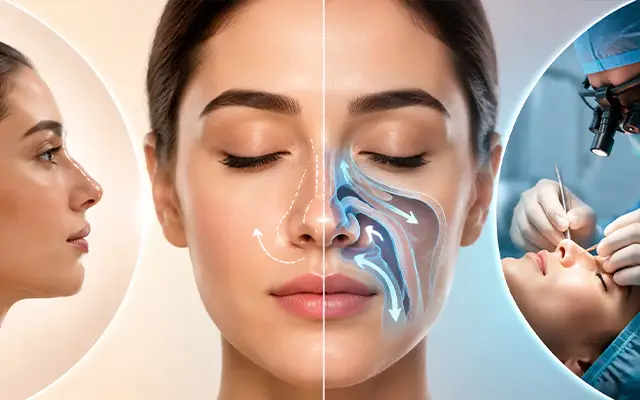
Many people think rhinoplasty is only about changing the appearance of the nose — improving its shape, size, or facial balance. However, modern nose surgery is not limited to cosmetic goals. In many cases, the same procedure can improve both how your nose looks and how well you breathe. This is where functional rhinoplasty, or a nose job, plays an important role.
Whether breathing difficulty is caused by a deviated septum, narrow nasal passages, or structural imbalance, the right surgical approach depends on the underlying cause. A detailed consultation helps determine whether you need functional correction, cosmetic refinement, or both.
What’s the Difference Between Cosmetic and Functional Rhinoplasty?
| Type of Rhinoplasty | Main Purpose | Common Concerns Addressed |
| Cosmetic Rhinoplasty | Improves the external appearance of the nose | Nose shape, bridge, tip, nostril size, facial proportion |
| Functional Rhinoplasty | Improves nasal airflow and breathing | Deviated septum, airway obstruction, nasal valve problems |
| Combined Rhinoplasty | Addresses appearance and function together | Breathing difficulty along with aesthetic concerns |
Cosmetic rhinoplasty focuses on reshaping the visible structure of the nose. Individuals may want correction of a dorsal hump, a drooping tip, asymmetry, or changes in overall proportion.
On the other hand, functional rhinoplasty corrects internal structural problems that affect breathing. The goal is not only to create a balanced appearance but also to restore proper airflow through the nasal passages.
Many individuals considering nose surgery have both concerns — they may dislike certain aspects of their nose while also experiencing breathing difficulties. In such cases, combining corrective and cosmetic rhinoplasty procedures can provide a more complete solution.
What Causes Breathing Problems in the Nose?

Breathing problems through the nose can happen due to several structural issues. Some people experience symptoms from childhood, while others develop problems after injuries, allergies, or changes inside the nose over time.
Deviated Septum
The septum is the cartilage and bone structure that separates the two nostrils. Ideally, it should sit centrally, allowing air to pass evenly through both sides.
A deviated septum occurs when this structure shifts away from the centre. It may happen naturally during development or after trauma, such as a sports injury or accident.
Common symptoms of a deviated septum include:
- Difficulty breathing through one or both nostrils
- Frequent nasal blockage
- Mouth breathing, especially during sleep
- Snoring
- Reduced airflow during exercise
Enlarged Turbinates and Narrow Nasal Valves
Turbinates are structures inside the nose that warm, filter, and humidify the air we breathe. When they become enlarged due to allergies, inflammation, or other causes, they can reduce the available airway space.
The nasal valves are another important area responsible for controlling airflow. If these areas are naturally narrow or weakened, breathing may feel restricted even when there is no obvious congestion.
A proper nasal assessment helps identify whether the issue is related to the septum, turbinates, nasal valves, or a combination of factors.
Can One Surgery Really Fix Both Appearance and Breathing?
Yes, in many cases, one procedure can address both concerns. The treatment is commonly known as septorhinoplasty.
Septorhinoplasty combines:
- Septoplasty — correction of the deviated septum to improve airflow
- Rhinoplasty — reshaping of the external nose for aesthetic improvement
During this combined approach, the surgeon corrects internal structural problems while also refining the external appearance of the nose.
For patients wondering, “Can rhinoplasty improve breathing?” the answer depends on what is causing the breathing problem. Rhinoplasty alone may not solve every airway issue, but when structural correction is included, it can significantly improve nasal function for suitable candidates.
Another advantage is efficiency. Instead of undergoing separate procedures at different times, patients may address both concerns during a single surgery and have one recovery period.
How Do Surgeons Decide Whether You Need Septoplasty Alone or a Combined Procedure?
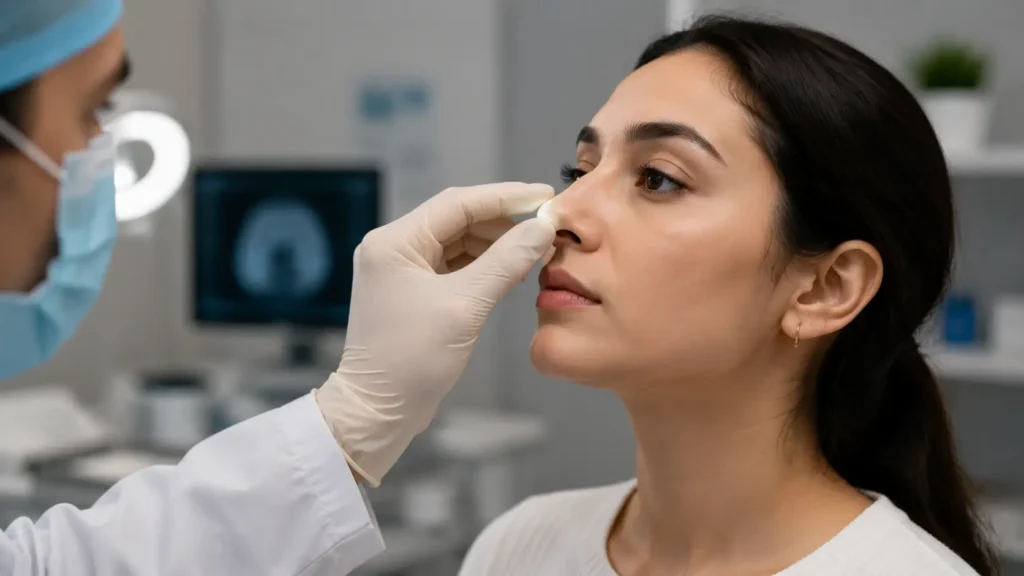
The choice between septoplasty and a combined procedure depends on your concerns, nasal anatomy, and treatment goals.
| Situation | Usually Considered |
| Breathing difficulty without appearance concerns | Septoplasty alone |
| Deviated septum with crooked nose appearance | Septorhinoplasty |
| Cosmetic concerns along with airway problems | Cosmetic and functional rhinoplasty combined |
A detailed consultation involving nasal examination and structural assessment helps the surgeon recommend the right approach.
What Happens During a Combined Septorhinoplasty?
A combined septorhinoplasty addresses both internal and external nasal structures during the same surgical session.
The septum is carefully corrected and repositioned to improve airflow. If required, additional adjustments may be made to structures such as the turbinates to support better breathing.
At the same time, external features like the bridge, tip, or overall nasal balance may be refined according to the individual’s goals.
The aim is to create a nose that looks natural while maintaining or improving its breathing function. A successful procedure focuses on balance — not simply making the nose smaller or changing its shape.
What Does Recovery Look Like After Functional Rhinoplasty?
Recovery after functional rhinoplasty varies from person to person, but most patients experience gradual improvement rather than immediate results.
| Recovery Stage | What to Expect |
| First 1–2 weeks | Swelling, congestion, and initial healing |
| After splint removal | Nose begins settling gradually |
| Following months | Breathing and appearance continue improving |
Many patients notice improved airflow before the final cosmetic outcome becomes visible. Following post-operative instructions and attending scheduled follow-ups are important for monitoring healing and achieving the best possible outcome.
Are the Results Permanent for Both Breathing and Appearance?
Structural improvements made during septoplasty or functional correction are generally long-lasting. Once the tissues heal, the improved nasal airflow can continue for many years.
Cosmetic rhinoplasty results also become stable after complete healing. However, the nose continues to subtly refine over time, and final shape changes may take up to a year.
Individuals can explore real rhinoplasty results and transformations at our clinic to understand realistic outcomes and healing patterns.
While surgery can provide long-term improvement, breathing issues may sometimes return due to unrelated factors such as allergies, sinus conditions, or natural changes over time.
What Are the Risks of Combining Cosmetic and Functional Correction?
Like any surgical procedure, combined rhinoplasty has potential risks. These may include infection, bleeding, asymmetry, healing concerns, or the possibility of revision surgery.
The unique challenge of combining cosmetic and functional correction is maintaining proper airway support while achieving the desired appearance.
This balance requires detailed knowledge of nasal anatomy and experience with both aesthetic and functional techniques. Choosing a qualified surgeon is an important part of achieving safe and predictable results.
Choosing the Right Nose Surgery for You
Rhinoplasty is not always only cosmetic; it can also improve breathing. Functional rhinoplasty corrects structural problems affecting airflow. Septorhinoplasty combines breathing correction with aesthetic improvement. The right procedure depends on your nasal anatomy and personal goals. Expert evaluation is essential before choosing nose surgery.
If you are experiencing breathing problems or considering nose surgery in Kolkata, a consultation with our team led by Dr Manoj Khanna can help you understand which approach is suitable for you.
Schedule an appointment today.
Frequently Asked Questions
How do you know if your breathing problem is from a deviated septum or something else?
A nasal examination is needed to identify the exact cause. Symptoms like one-sided blockage, chronic congestion, and difficulty breathing during exercise may indicate structural issues such as a deviated septum, but other conditions can also contribute.
Can rhinoplasty be done for breathing issues only, without changing the nose’s appearance?
Yes. Functional rhinoplasty can focus on improving nasal airflow without significantly altering the external appearance when cosmetic changes are not required.
How long after surgery will you notice better breathing?
Many patients notice improvement after the initial swelling reduces. However, complete breathing improvement may continue gradually over several months as internal healing progresses.
Is combined septorhinoplasty more painful than cosmetic rhinoplasty alone?
Pain levels vary between individuals. Since both procedures involve nasal structures, recovery experiences are usually similar and managed with proper aftercare.
Will fixing a deviated septum change how your nose looks from the outside?
Septoplasty alone usually does not change external appearance. However, if the external nose is also corrected through septorhinoplasty, visible changes may occur.
Can breathing problems come back after septoplasty?
Breathing improvement is generally long-lasting, but future issues may develop due to allergies, injuries, or other nasal conditions.
How long is the recovery for a combined procedure compared to cosmetic-only rhinoplasty?
Both procedures typically require a similar recovery timeline because healing involves the nasal structures. Final results continue improving over several months.