

“Cancer from breast implants” and “breast implant illness” are two phrases that can make anyone reconsider breast augmentation. Some sources describe breast implants as perfectly safe. Others share experiences of people developing serious health problems years after surgery.
So, are breast implants safe? For most patients, serious complications are uncommon. However, implants carry genuine risks and are not lifetime devices.
Understanding those risks matters before making a decision. This article examines BIA-ALCL, breast implant illness, current scientific research, and the precautions that can help patients make informed choices.
Are Breast Implants Safe?
Breast implants are generally considered safe for appropriately selected patients, but they are not risk-free. Although many patients experience satisfactory results, complications can develop over time. Implant safety depends on the type of implant, the patient's health, surgical expertise, and ongoing monitoring after the procedure. Therefore, safe does not mean permanent or complication-free. It means understanding the risks, recognising changes, and maintaining regular medical follow-ups.
What Is BIA-ALCL, and Is It Breast Cancer?
Breast implant-associated anaplastic large cell lymphoma (BIA-ALCL) is a rare cancer affecting the immune system. Unlike conventional breast cancer, it generally develops in the scar tissue or fluid surrounding a breast implant.
The most common warning sign is sudden swelling in one breast, often caused by fluid accumulation years after surgery. Less common symptoms include persistent discomfort, unusual hardening, or a new lump near the implant.
Fortunately, BIA-ALCL is often treatable when diagnosed early. Treatment usually involves removing the implant and surrounding scar capsule, although advanced cases may require additional treatment.
How Common Is BIA-ALCL?
BIA-ALCL is uncommon, but research shows a strong connection with textured breast implants (Source). These implants have rough outer surfaces designed to interact with surrounding breast tissue. Certain textured implant products have been associated with significantly higher lymphoma risks than smooth implants.
Although most documented cases involve textured implants, a smaller number of reports mention smooth implants. However, some patients had previous exposure to textured devices, making their individual risk difficult to determine.
Additionally, incomplete reporting means the exact frequency remains uncertain. Researchers continue studying implant-related cancers to understand their causes and long-term risks.
For patients without symptoms, preventive implant removal is generally not recommended solely because of BIA-ALCL concerns. Surgery carries its own risks, including bleeding, infection, and complications associated with anaesthesia.
Textured or Smooth: Which Implant Surface Is Safer?
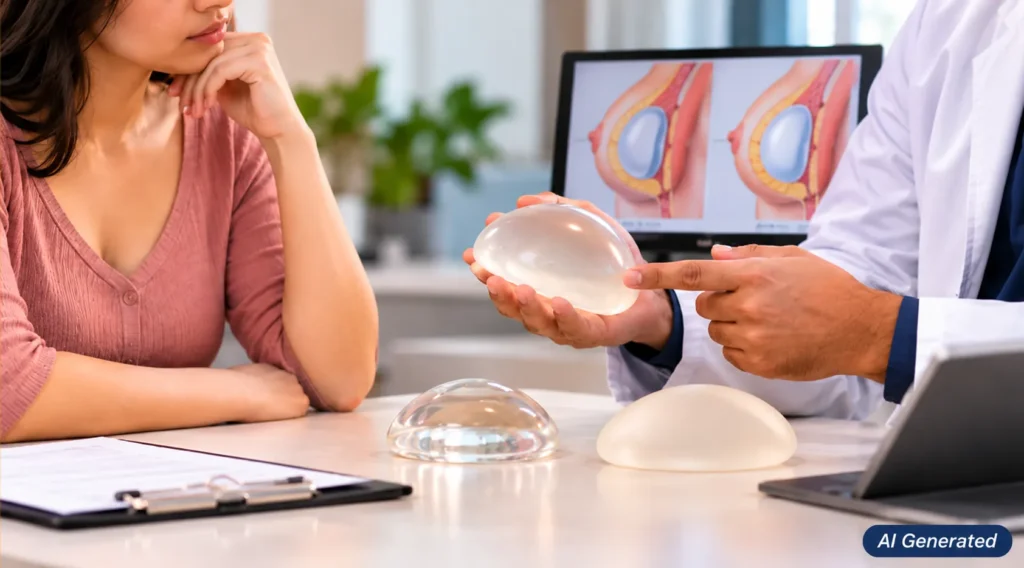
Textured implants have rougher outer shells that adhere more closely to surrounding tissue. Smooth implants have softer surfaces that generally move more freely. Regarding BIA-ALCL, smooth implants have a substantially lower documented risk. However, implant selection also depends on breast anatomy, aesthetic goals, and individual medical considerations.
Patients who already have implants can identify their type through their surgical records or implant device card. Importantly, most people with textured implants never develop BIA-ALCL. Regular examinations and early investigation of unusual changes help identify potential complications before they become more serious.
What Is Breast Implant Illness (BII)?

Breast implant illness refers to a collection of physical and cognitive symptoms that some patients associate with their implants.
Common symptoms of breast implant illness include:
- Persistent fatigue or weakness
- Joint and muscle pain
- Brain fog or concentration difficulties
- Unexplained skin rashes
- Sleep disturbances
Currently, BII does not have universally accepted diagnostic criteria, and no single medical test confirms it. However, these reported symptoms deserve proper medical attention, even when their relationship with implants remains uncertain.
What Does the Research Actually Say About BII?
Research into BII has produced findings that support an association between breast implants and certain systemic symptoms.
A systematic review and meta-analysis involving 10,519 patients found that fatigue, muscle discomfort, and cognitive difficulties were reported nearly as frequently among people with implants compared with those without them. (Source)
Another 2025 review involving 6,048 women found that approximately 81.9% of patients reported symptom improvement following implant removal. (Source). However, these findings require careful interpretation.
Many studies rely on self-reported symptoms, involve selected patient populations, or lack suitable comparison groups. Similar complaints can also arise from thyroid disorders, autoimmune diseases, vitamin deficiencies, or prolonged stress.
The practical approach is to take unexplained symptoms seriously, undergo a complete medical assessment, and discuss breast implant removal (explant) with an experienced surgeon when appropriate.
Do Breast Implants Need to Be Replaced or Checked?
Breast implants require long-term monitoring because complications become more likely as devices age. Silicone implants can occasionally rupture without noticeable symptoms. This is called a silent rupture, and physical examination alone may not detect it. Consult your surgeon to establish a suitable monitoring schedule.
Seek medical attention if you experience:
- Sudden breast swelling or enlargement
- A new lump near the implant or armpit
- Persistent pain or changes in breast shape
- Unexplained fatigue or ongoing joint discomfort.
Early investigation can help identify complications and guide appropriate treatment.
How Can You Lower Your Risk Before Surgery?
Although side effects of breast implants cannot be eliminated, careful preparation can reduce unexpected problems.
Consider the following precautions:
- Choose a qualified surgeon: Consult a board-certified plastic surgeon experienced in breast procedures.
- Understand implant options: Ask whether the proposed implant is smooth or textured and discuss its safety profile.
- Review device information: Request the checklist for decision-making with an implant identification card.
- Discuss alternatives: Consider fat transfer or a breast lift without implants when appropriate.
- Share your medical history: Inform your surgeon about autoimmune conditions, allergies, and existing illnesses.
- Plan long-term care: Discuss regular examinations, imaging requirements, and possible future surgery.
A thorough consultation helps ensure your expectations match the procedure's benefits and limitations.
Informed Choice, Not Fear
Breast implants can provide satisfactory results, but concerns surrounding BIA-ALCL, BII, and future revision surgery deserve attention. Making an informed decision involves understanding the available evidence, choosing an experienced plastic surgeon, and maintaining regular follow-ups.
If you are considering breast surgery for enlargement or experiencing problems with existing implants, book a consultation in Kolkata.
People Also Ask
- Can Breast Implants Cause Autoimmune Disease?
Some studies have identified associations between implants and certain autoimmune symptoms or conditions. However, researchers have not established a definitive causal relationship. Patients with existing autoimmune disorders should discuss their medical history before surgery.
- Does Removing Implants Cure Breast Implant Illness?
Some patients experience significant symptom improvement following removal. However, there is no guarantee that surgery will resolve every symptom, especially when other medical conditions are involved.
- Are Textured Breast Implants Banned?
Certain textured implant products were recalled because of lymphoma concerns. However, regulatory restrictions differ between countries, and not every textured implant has been universally banned.
- Can You Breastfeed With Breast Implants?
Many women can successfully breastfeed after breast augmentation. However, the ability to produce milk may depend on incision placement, surgical technique, and whether milk ducts or nerves were affected.
- How Do You Know if an Implant Has Ruptured?
Saline implant rupture usually causes noticeable breast deflation. Silicone ruptures may remain silent, making ultrasound or MRI necessary for confirmation.
- Are Silicone or Saline Breast Implants Safer?
Both implant types have benefits and limitations. When comparing silicone vs saline breast implants safety, saline ruptures are generally easier to recognise, while silicone implants often provide a more natural feel. The most suitable option depends on individual needs.