Facelift Surgery in Kolkata for Natural-Looking Facial Rejuvenation
By Dr Manoj Khanna — Board-Certified Plastic Surgeon, MBBS, MS, MCh (Plastic Surgery) | 30+ Years of Experience Enhance Aesthetic & Cosmetic Studio, Loudon Street, Kolkata
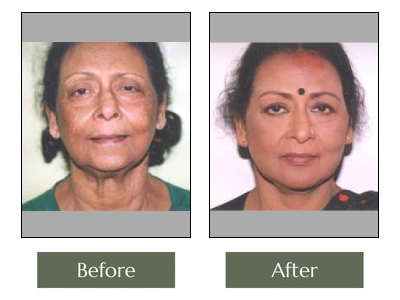
Before and After Results
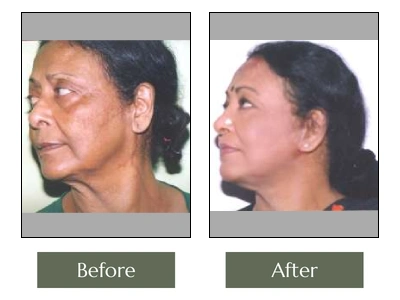
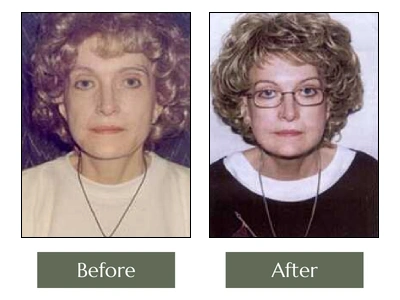
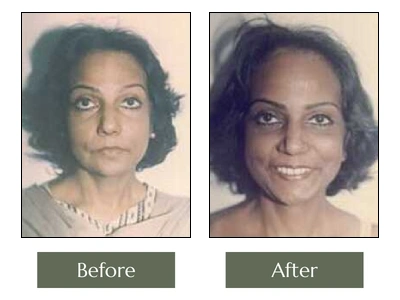
Patient Experiences
4.7 ★★★★★
670+ Google reviews
Why Choose Dr Manoj Khanna for Facelift Surgery?
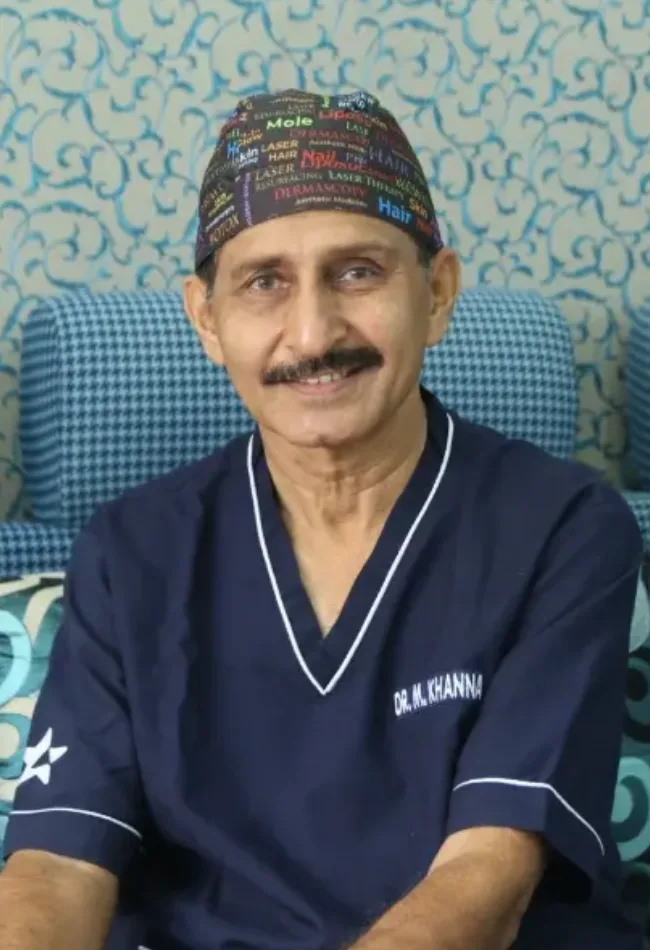
Dr Manoj Khanna plans facelift surgery in Kolkata around each patient’s facial structure, tissue laxity, skin quality, medical history, and aesthetic goals.
30+ Years of Aesthetic Surgical Experience
Over three decades of surgical experience support careful treatment planning.
Personalised Facial Assessment
The cheeks, jawline, neck, skin elasticity and facial balance are assessed.
Individualised Facelift Planning
The technique is selected based on facial anatomy, concerns, and goals.
Focus on Natural-Looking Rejuvenation
The aim is natural-looking facial rejuvenation without an excessively tight appearance.
Safety-Focused Surgical Approach
Patient selection, anaesthesia, facial tissue repositioning and monitoring are prioritised.
Realistic Treatment Guidance
Expected results, scars, recovery, limitations and risks are clearly explained.
Awards

Clients

Client Satisfaction

Cosmetic Procedures

Key Facts at a Glance
| Information | Details |
|---|---|
| Procedure | Surgical facial rejuvenation |
| Medical Name | Rhytidectomy |
| Treats | Sagging cheeks, jowls and reduced jawline definition |
| Areas | Cheeks, lower face, jawline and neck, if required |
| Anaesthesia | General anaesthesia or IV sedation |
| Duration | Usually 2–6 hours |
| Hospital Stay | Day care or overnight stay |
| Light Activities | Often after 1–2 weeks |
| Exercise | Usually after 4–6 weeks, with clearance |
| Results | Appear gradually as swelling settles |
| Surgeon | Dr Manoj Khanna, MCh (Plastic Surgery) |
| Location | Suite 5A, Minto Park, Maruti Building, 12, Sir UN Brahmachari Sarani, opposite Bellevue Clinic, Kolkata, West Bengal 700017 |
What is Facelift Surgery?
A facelift, medically called rhytidectomy, is a surgical procedure that improves visible signs of facial ageing by repositioning deeper tissues, adjusting selected fat deposits and removing excess skin. Facelift surgery may reduce sagging in the cheeks and lower face, soften jowls, and improve jawline definition, but it cannot stop the natural ageing process or fundamentally change a person’s appearance.
What’re the Benefits of Facelift Surgery?
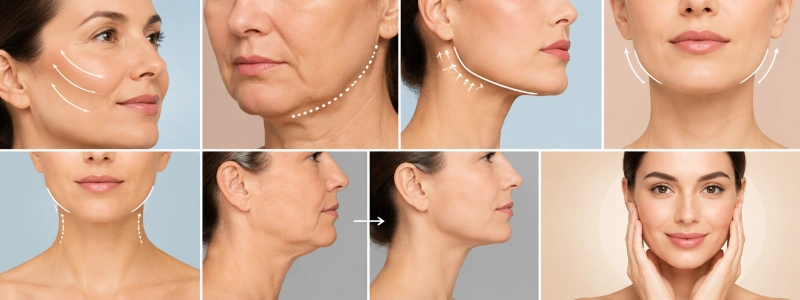
- Improved cheek position
- Reduced appearance of jowls
- Clearer jawline definition
- Firmer lower-face contours
- Better face-and-neck balance
- Longer-lasting structural correction
- Natural-looking facial rejuvenation based on individual anatomy
How Does Facelift Surgery Work?
Repositioning Deeper Facial Tissues
Deeper tissues are lifted and repositioned to improve the cheeks, lower face and jawline.
Managing Facial Fat Where Required
Fat may be repositioned, removed or added to restore facial balance.
Redraping the Facial Skin
The skin is redraped smoothly over the adjusted contours without excessive tension.
Removing Selected Excess Skin
Excess skin is removed conservatively for a smoother, natural-looking result.
Addressing the Neck Where Required
A face and neck lift may also correct loose neck skin, visible bands or fullness beneath the chin.
When Should You Consider Consulting a Facelift Surgeon?
Consider consulting a qualified facelift surgeon for concerns such as:
- Sagging through the cheeks
- Jowls along the jawline
- Reduced jawline definition
- Loose skin in the lower face
- Deepened folds between the nose and mouth
- Descended facial tissues
- Loose skin around the chin or neck
- An aged or tired appearance
- Limited improvement from non-surgical treatments
- Facial changes following significant weight loss
- A preference for balanced rather than excessive rejuvenation
- The need for longer-lasting structural correction
When Should You Consult an Expert?
You may consider rhytidectomy when you:
- Have sagging cheeks, jowls or loose lower-face skin
- Retain a reasonable degree of skin elasticity
- Maintain a stable body weight
- Do not smoke or are willing to stop as medically advised
- Do not have an uncontrolled condition that may affect healing
- Have realistic expectations
- Understand that scars and recovery are part of surgery
- Are prepared to follow postoperative instructions
What Does Dr Manoj Khanna Evaluate?
The evaluation may include:
- Facial bone structure
- Skin quality and skin elasticity
- Degree of facial and neck laxity
- Position and distribution of facial fat
- Cheek contour
- Jowls and jawline condition
- Neck skin and visible neck bands
- Facial symmetry
- Medical and surgical history
- Current medicines and supplements
- Previous facial surgery or non-surgical treatment
- Smoking, nicotine and alcohol use
- Individual expectations
- Readiness to follow recovery instructions
Which Areas Can Be Improved With Facelift Surgery?
Cheeks and Mid-Face
Selected techniques may lift descended cheek tissues and improve the transition between the lower eyelids and cheeks.
Lower Face
A facelift may reduce lower facial laxity and create a firmer lower-face contour.
Jowls and Jawline
Deeper tissue repositioning may soften jowls and improve jawline definition.
Area Around the Mouth and Lower Cheeks
The procedure may soften nasolabial folds and deeper creases but cannot remove every surface wrinkle.
Chin and Upper Neck
When combined with neck correction, surgery may improve loose skin, localised fat and chin-to-neck definition.
Which Types of Facelift Surgery May Be Considered?
| Facelift Type | Main Focus | Key Point |
|---|---|---|
| Traditional or Full Facelift | Cheeks, lower face and jawline | Treats moderate to significant ageing using incisions around the hairline and ears |
| SMAS Facelift | Lower face and jawline | Repositions the supporting SMAS tissue layer beneath the skin |
| Deep-Plane Facelift | Cheeks, lower face and deeper tissues | Lifts selected skin, fat and deeper tissues together |
| Mini Facelift | Early or limited lower-face laxity | Uses shorter incisions but provides less correction than a full facelift |
| Mid-Facelift | Cheeks and central face | Repositions descended cheek tissues |
| Face and Neck Lift | Face, jawline, chin and neck | Treats facial sagging with loose neck skin, neck bands or submental fat |
What a Facelift Can’t Correct?
- Fine surface lines
- Sun-damaged skin
- Uneven pigmentation
- Changes in skin colour
- Dynamic expression lines
- Drooping eyebrows
- Upper or lower eyelid ageing
- Nose shape
- Uneven skin texture
Facelift vs Neck Lift: Which Procedure May Be Suitable?
| Feature | Facelift | Neck Lift |
|---|---|---|
| Main Area | Cheeks, lower face and jawline | Chin, jawline and neck |
| Common Concerns | Sagging cheeks, jowls and lower-face laxity | Loose neck skin, neck bands and submental fullness |
| Tissue Correction | Facial supporting tissues, fat and selected skin | Neck tissues, platysma muscle, fat and selected skin |
| Typical Incisions | Around the ears and hairline | Around the ears and possibly beneath the chin |
| Combination | May include neck correction | May be performed with a facelift |
| Suitability | Based on the facial ageing pattern | Based on neck-specific concerns |
Facelift Surgery: A Step-by-Step Guide
Step 1
Consultation and Facial Assessment
Dr Manoj Khanna evaluates facial proportions, skin quality, tissue laxity, jawline, neck and treatment goals.
Step 2
Preoperative Preparation
The team provides medical tests, fasting, nicotine cessation, transport, and medication instructions.
Step 3
Anaesthesia Administration
The surgical plan determines whether the team uses general anaesthesia or intravenous sedation with local anaesthesia.
Step 4
Incision Placement
Incisions are positioned around the temple hairline, natural ear creases, lower scalp and, when required, beneath the chin.
Step 5
Deeper Tissue Repositioning
Selected supporting tissues are lifted and repositioned to improve the cheeks, lower face and jawline.
Step 6
Fat Adjustment
Facial fat may be repositioned, reduced or added through facial fat transfer to improve balance.
Step 7
Skin Redraping and Closure
The skin is redraped, selected excess skin is removed, and the incisions are carefully closed.
Step 8
Dressing, Monitoring and Follow-Up
The team applies dressings, may use drains, and monitors the patient before discharge or overnight observation.
Can Facelift Surgery Be Combined With Other Procedures?
Additional procedures may address ageing concerns outside the areas a facelift treats.
Neck Lift
A neck lift treats loose neck skin, neck bands and fat beneath the chin.
Eyelid Surgery
Blepharoplasty addresses loose eyelid skin, puffiness and under-eye bags.
Brow Lift
A brow lift may improve lowered eyebrows and forehead laxity.
Facial Fat Transfer
Facial fat transfer may restore lost volume and improve facial balance.
Chin or Jawline Procedures
Chin correction, implants, or liposuction may improve facial proportion.
Skin-Resurfacing Treatments
Laser skin resurfacing or chemical peels may address surface lines, pigmentation and texture.
What Are the Risks of Facelift Surgery and Safety Measures to Follow Afterwards?
Possible Risks
- Anaesthesia-related, blood-clot or cardiopulmonary complications
- Bleeding, haematoma or fluid build-up
- Infection, delayed wound healing or skin loss
- Swelling, pain, numbness or altered sensation
- Facial nerve weakness, asymmetry or contour irregularities
- Discolouration, hair loss near incisions
- Unfavourable facelift scars
- Unsatisfactory results or the need for revision surgery
Safety Measures to Follow Afterwards
- Keep the head elevated as instructed
- Care for the incisions and drains correctly
- Take prescribed medicines on time
- Do not smoke or use nicotine
- Avoid strenuous exercise and heavy lifting
- Do not press, rub or massage the treated areas without approval
- Wear dressings or facial support as advised
- Avoid unapproved medicines and supplements
- Protect healing incisions from direct sun exposure
- Attend every scheduled follow-up
- Report unexpected changes promptly
When to Contact the Surgical Team?
Contact the surgical team promptly if you develop rapidly increasing swelling, severe one-sided facial or neck pain, bleeding that soaks the dressing, fever, unusual wound discharge, or wound separation. Seek urgent medical care for chest pain, breathing difficulty or an irregular heartbeat.
What is the Recovery Timeline After Facelift Surgery?
First 48–72 Hours
Swelling, bruising, tightness, and numbness are common; dressings or drains may be used, and you should keep your head elevated.
First Week
The team reviews incisions and dressings, and may remove drains and selected sutures as healing progresses.
Days 10–14
Light social activities may resume, although some swelling, bruising or tightness can remain.
Weeks 3–6
Normal routines and exercise may resume gradually after the surgeon confirms adequate healing.
Months 2–6
Residual swelling and tightness settle as facial contours become clearer and incision lines mature.
Where Will Facelift Incisions and Scars Be?
Facelift incisions are commonly placed within the temple hairline, around and behind the ears, and into the lower scalp; neck correction may also require an incision beneath the chin. Although discreetly placed, facelift scars remain, and their visibility depends on skin type, genetics, healing, smoking, sun exposure, and postoperative care.
What Results Can You Expect From Facelift Surgery?
Possible improvements include:
- Better cheek position
- Reduced appearance of jowls
- Clearer jawline definition
- Firmer lower-face contours
- Improved balance between the face and neck
- Smoother transitions between facial areas
- A refreshed rather than over-tightened appearance
How Can You Maintain Facelift Surgery Results?
- Maintain a stable body weight
- Avoid smoking and nicotine
- Protect the skin from excessive sun exposure
- Use suitable sunscreen
- Follow a medically appropriate skincare routine
- Eat a balanced diet
- Stay physically active after medical clearance
- Attend follow-up appointments
- Follow all postoperative instructions
- Discuss future cosmetic treatments with the surgeon
What Impacts Facelift Surgery Pricing?
The cost of facelift surgery in Kolkata depends on the treatment plan, surgical complexity and whether additional facial or neck procedures are required.
Factors That May Influence the Cost:
Type of Facelift
Extent of Facial Correction
Inclusion of Neck Surgery
Overall Surgical Complexity
Anaesthesia Requirements
Hospital or Facility Requirements
Combination With Other Procedures
Preoperative Investigations
Postoperative Care and Follow-Up
Take The Next Step Today!
Are you looking for a facelift surgery in Kolkata? A consultation with Dr Manoj Khanna can help determine suitability, the right surgical approach, and what recovery and results you can realistically expect.
Schedule Your Consultation
Share a few details and the clinic team will guide you on the next step.
What People Also Ask
How is it decided whether a facelift or neck lift is more suitable?
A facelift treats the cheeks, lower face and jowls, while a neck lift targets loose neck skin, neck bands and submental fullness.
Can men undergo facelift surgery?
Yes. Planning accounts for the hairline, beard pattern, skin thickness and facial structure.
Can a facelift improve loose facial skin after major weight loss?
Yes, once weight is stable. Suitability depends on skin laxity, remaining facial volume and general health.
Will a facelift change natural facial expressions?
The aim is to preserve natural expressions, although temporary tightness or altered sensation may occur during recovery.
Can another facelift be performed if ageing continues?
A repeat or revision facelift may be considered if laxity returns, following an assessment of health, skin quality and previous surgery.
Do facelifts always look fake or "windblown?
Modern techniques target underlying muscle and tissue layers (like the SMAS or deep plane) to restore youthful contours naturally, avoiding a tight, pulled look